WHAT IS THE DIFFERENCE BETWEEN THERMOSET AND THERMOPLASTIC?
Despite having names that sound similar, thermoset plastics and thermoplastics are two entirely different types of materials. Depending on the specific attributes and aesthetics needed, each one is appropriate for various plastic product kinds and applications. Despite the fact that they both share significant characteristics that allow for the creation of highly customised shapes and designs, there are also a number of critical distinctions to be aware of.
Thermoset plastics are used instead of thermoplastics to make plastic components because, after heat treatment, their physical and chemical characteristics are permanently fixed in the former. When subjected to excessive heat, they neither melt into a liquid nor distort. Thermoset plastics form irreversible chemical bonds during the curing process, however, despite the fact that they are single use and cannot be recycled, they are strong, resistant to heat, have a good chemical resistance, and mechanical strength.
Alternatively, thermoplastics are more well-known for their flexibility and reusability. When heated, thermoplastic resins go from being solid at room temperature to becoming flexible and eventually fluid as a result of crystal melting or when they reach the glass transition temperature (Tg). To create the necessary plastic component, they go through an injection moulding and cooling procedure that is completely reversible.
Since thermoplastic polymers’ structures differ from those of thermoset plastics, this is the case. The technique of heating and moulding doesn’t involve any chemical holding. The performance or material characteristics of thermoplastics can be repeatedly modified and reused without being harmed. Despite not being as strong as thermoset polymers, thermoplastics have a number of advantages.
ADVANTAGES OF THERMOPLASTIC COMPOSITES COMPARED TO THERMOSET COMPOSITES
Thermoplastics can be reheated and are incredibly flexible and recyclable meaning they can be remoulded numerous times. They offer good material properties and physical properties including electrical insulation, strong impact resistance, and good adhesion to metals and other materials. They are ideal for packaging and medical applications in particular because they can withstand corrosion, chemical, and detergent resistant. When it comes to colours, forms, textures, and finishes, they have a lot of flexibility.
However, because of their increased strength, thermoset polymers are well suited for a wide range of applications that call for high levels of resistance and longevity. They combine to create a solid, hard substance that is durable and resistant to wear, chemicals, and withstand high temperatures. Additionally, thermoset polymers have superior mechanical qualities and may be produced at a reasonable cost. They are capable of being moulded into intricate designs with appealing looks and finishes.
HOW CAN I TELL IF A PLASTIC IS THERMOSET OR NOT?
Using a chemical process called curing, a thermoset polymeric polymer can be transformed into a different form. Small, unlinked monomers make up thermoset plastic polymers in their uncured state. These create longer molecular chains by cross-linking during the curing process, which solidifies the substance into the desired shape and size.
A thermoset material is going to be hard, robust, and long-lasting. However, because it cannot change back into a prior state of matter, it is not recyclable.
Molecular weights, abrasion resistant, molecular structure, and free radical are critical aspects in determining the properties of thermoplastics and thermoset plastics. High density polyethylene (HDPE) and low density polyethylene (LDPE) are examples of thermoplastic materials with different molecular structures. Thermoset plastics, on the other hand, are known for their weather resistant properties and are formed through a manufacturing process involving chemical structure and long chain polymerisation reactions.
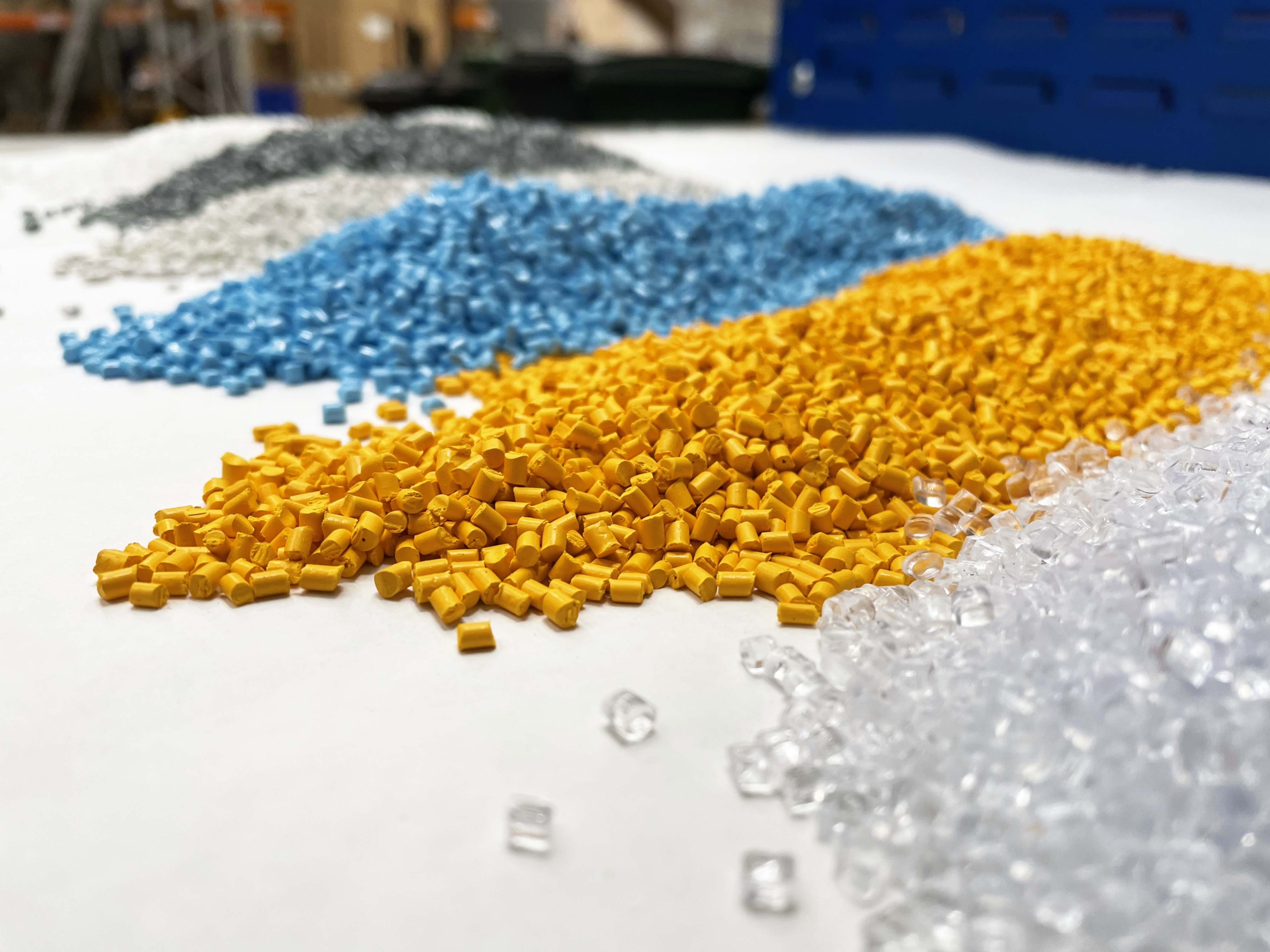
THERMOPLASTIC AND THERMOSET MATERIALS EXAMPLES INCLUDE:
The low melting point of thermoplastics makes them perfect for applications involving recyclable materials. Common types of thermoplastic materials that are frequently utilised:
· Polyethylene
· Acrylonitrile Butadiene Styrene (ABS)
· Polyamide (Nylon)
· Polystyrene (PS)
Plastic bags, clothing and textiles, insulation for electric cables, food packaging, and protective films are just a few of the uses for this material. Due to their resistance to corrosion, they are also employed in the production of liquid storage tanks.
Thermoset plastics, on the other hand, are more resilient because they can resist high temperatures without deforming. Types of polymers used frequently in thermoset plastics:
· Polyurethanes
· Fluoropolymers
· Bismaleimide (BMI)
· Phenolics
They are utilised in a variety of products, including toys, electrical appliances, storage containers, electrical plugs, pipelines, vehicle parts, and medical and construction equipment.
READY TO START?
To get your components or sub-assemblies manufactured by us, you can call our team on 01543 462 561 or send an email enquiry to [email protected]. Our team of experts will be in contact within hours to help you with your project.
We can advise on the design of your product to suit the manufacturing processes required. We can organise tooling for you and manage the project for you so that you receive conforming parts at a competitive price. And we’ll keep doing that for you for as many years as you need us to.