Plastic Extrusion vs Injection Moulding: Which Process is Right for Your Component?
Choosing the wrong manufacturing process early is an expensive mistake. By the time you realise, you’ve already paid for tooling you can’t use. Reworking a mould tool or switching process mid-project adds cost, delays production, and makes for a difficult conversation with whoever signed off the budget.
Most guides on this topic will walk you through what extrusion and injection moulding are. This one is more interested in helping you decide which one you actually need, and that starts with acknowledging something most suppliers won’t: the advice you get is usually shaped by what the person giving it can actually make.
If a manufacturer only does injection moulding, they’ll find a reason to injection mould your part. If they only do extrusion, same story. Goodfish runs both processes across four UK sites, so we don’t have a reason to push you either way. If extrusion is the better fit, we’ll tell you. If it’s injection moulding, same answer.
The Difference in Plain English
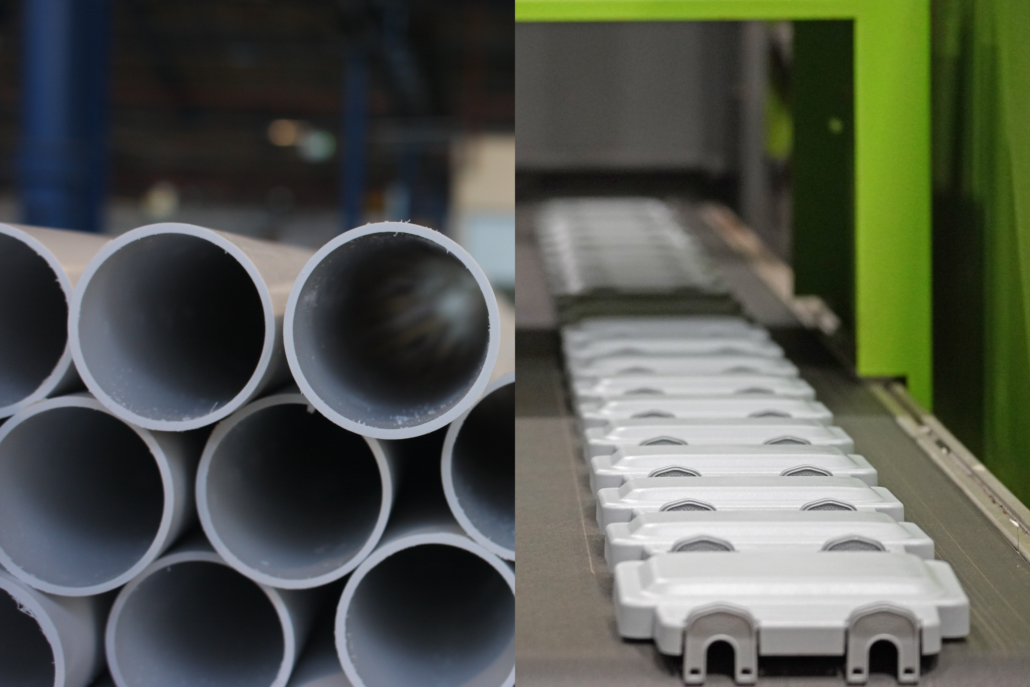
Extrusion produces a continuous profile with a constant cross-section along its length. Think tubes, channels, trims, seals, and cable management profiles. The material is pushed through a shaped die and cut to whatever length you need. The shape is always the same end to end.
Injection moulding produces discrete three-dimensional parts. The plastic is injected into a closed mould tool, cooled, and ejected as a finished component. Each shot produces one or more complete parts, and the geometry can be as complex as the tool allows, clips, threads, ribs, bosses, snap fits, internal voids.
The simplest way to tell them apart: if your part looks the same in cross-section from one end to the other and could theoretically be any length, it’s probably an extrusion. If it’s a standalone 3D component with features on multiple faces, it’s almost certainly injection moulding.
When Extrusion is the Right Choice
Extrusion tends to be the right call when your part has a uniform cross-section from one end to the other and needs to be produced in continuous lengths. If you’re looking at profiles, tubes, channels, seals, trims, or cable management products, extrusion is almost certainly the process you want.
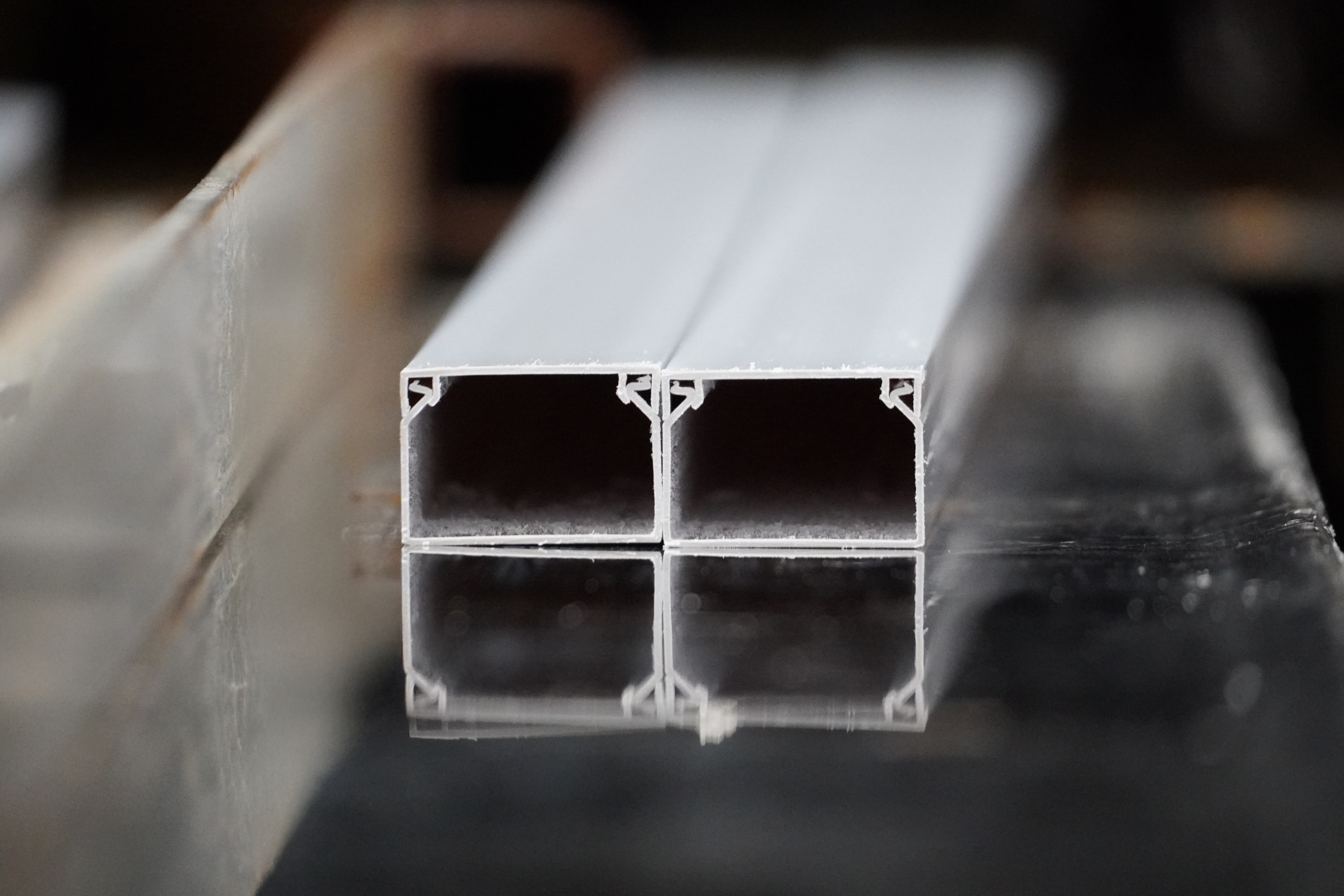
It’s also worth considering when upfront tooling cost is a factor. An extrusion die is significantly cheaper than an injection mould tool, and lead times from drawing approval to first production are typically shorter too. More on that in the tooling section below.
Extrusion works well when:
- The part has a constant cross-section along its full length
- You need it cut to specific lengths rather than produced as individual components
- You’re running high volumes of a continuous profile
- Co-extrusion is needed, for example combining a rigid body with a flexible seal in a single profile
- Tooling budget is limited and a simpler die is more appropriate than a full mould tool
If your component ticks most of those boxes, extrusion is likely the more practical and cost-effective route. If it only ticks one or two, it’s worth reading the next section before you decide.
When Injection Moulding is the Right Choice
Injection moulding is the right process when your part is a standalone three-dimensional component that can’t be produced as a continuous profile. If it has geometry on multiple faces, internal features, or needs to function as a finished part straight out of the tool, injection moulding is almost certainly where you need to be.
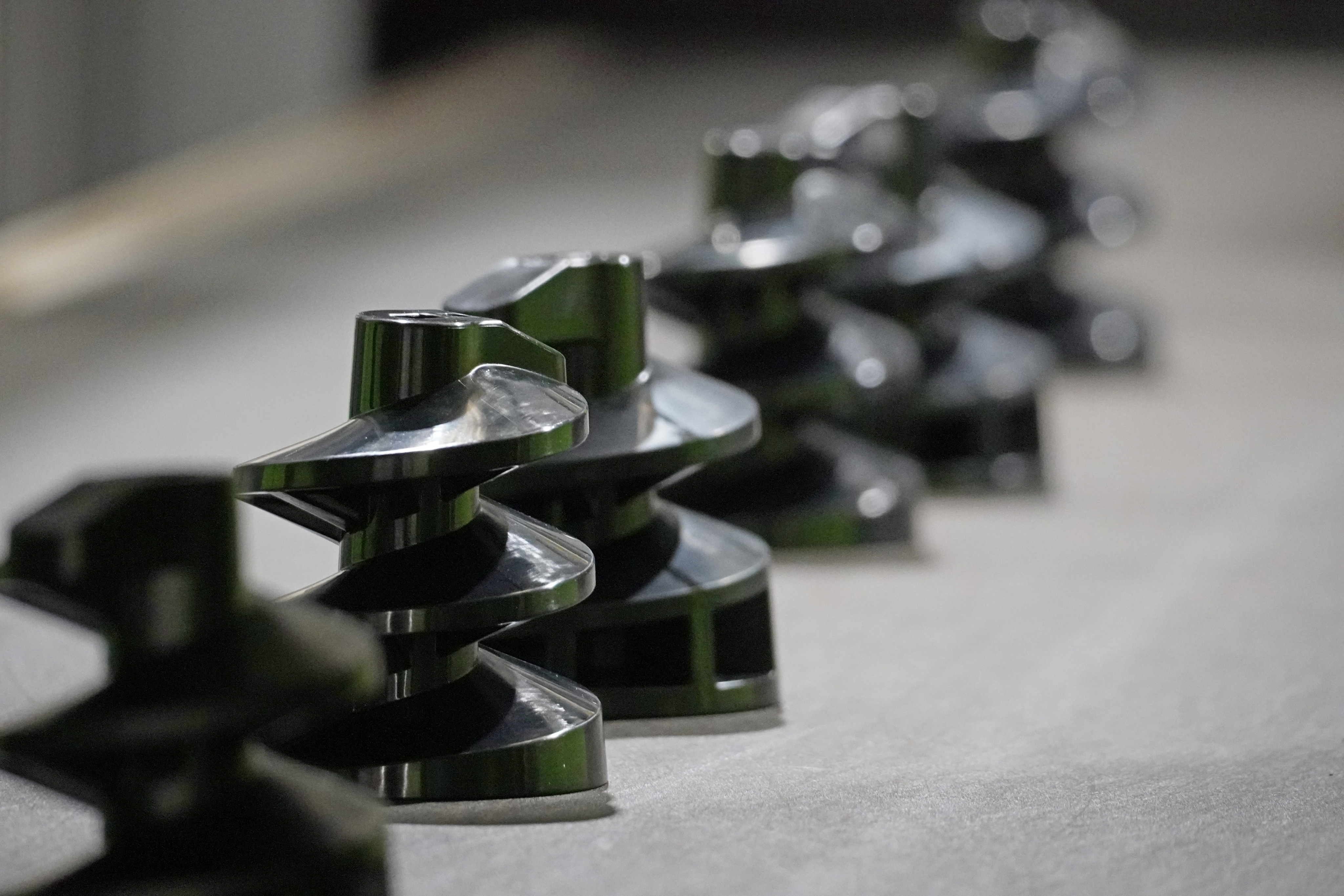
It’s the process of choice for high volume production of complex, precise components. Once the tool is made and the process is set up, it can produce thousands or millions of identical parts with consistent quality and tight tolerances, which is why it’s used across so many demanding industries.
Injection moulding works well when:
- The part is a complex 3D shape with features on more than one face
- You need threads, clips, bosses, ribs, snap fits, or internal geometry
- Surface finish and dimensional consistency matter across high volumes
- You’re producing discrete components rather than lengths of profile
- The application demands tight tolerances and repeatable quality at scale
Goodfish works with manufacturers and organisations across a wide range of industries, from multinationals to Tier 1 suppliers. The common thread isn’t the sector, it’s the need for high volume, consistent, repeatable production at scale. If that sounds like your requirement, injection moulding is likely the conversation worth having.
Can Both Processes Use the Same Materials?
Mostly, yes. Material choice is rarely what decides between extrusion and injection moulding, because the most common thermoplastics run well through both. That includes:
- Polypropylene (PP)
- Polyethylene (PE)
- PVC, rigid and flexible
- ABS
- Polycarbonate (PC)
- Nylon (PA)
- Acetal (POM)
- Acrylic (PMMA)
- TPE and TPU
What changes is the grade. Extrusion grades are generally stiffer when molten so the profile holds its shape as it leaves the die, while injection grades flow more easily to fill a mould. Extruded profiles also swell slightly as they exit the die, which is allowed for when the die is designed. Offcuts and start-up scrap from both processes can usually be reground and reused, so waste is kept low.
If you’re still choosing a material, our guide on how to choose the right plastic for your part is a good place to start.
What About Tooling Costs? Here’s What Buyers Often Don’t Know
Before you commit to either process, there’s a conversation worth having that a surprising number of buyers haven’t thought about: tooling.
The tool, whether that’s an extrusion die or an injection mould, is paid for by you, not the manufacturer. It’s one of the most common assumptions we come across at Goodfish, buyers either haven’t factored tooling into their budget at all, or they’ve assumed it’s covered in the part price. It isn’t. The tooling cost is separate, and it’s yours to fund upfront.
The good news is that the tool belongs to you. Once production is complete, Goodfish stores it at our facility on your behalf, which is what most customers choose to do. But if you ever want to move production to another supplier or bring it in-house, the tool is yours to take. No complications, no arguments. It goes where you want it to go.

In terms of what to budget, the difference between the two processes is significant:
| Extrusion Die | Injection Mould (Aluminium) | Injection Mould (Steel) | |
| Typical cost | £750 to £3,000 | £5,000 to £15,000 | £10,000 to £50,000+ |
| Lead time | 2 to 4 weeks | 2 to 4 weeks | 8 to 16 weeks |
| Tool life | High volume runs | Up to ~10,000 shots | Millions of cycles |
| Best for | Profiles and continuous lengths | Prototyping and low volume | High volume production |
These are indicative industry ranges rather than fixed quotes. The actual cost will depend on the size and complexity of your component, but they give you a realistic starting point for budget conversations.
The earlier you factor tooling into your budget, the fewer surprises you’ll have when quotes come back.
What if You’re Not Sure Which Process You Need?
If you’ve read this far and you’re still not certain, you’re not alone. Some components sit comfortably in one camp, but others aren’t immediately obvious, and getting it wrong at the design stage is a costly mistake to unpick later.
A few quick questions worth asking yourself before you pick up the phone:
- Does my part have the same cross-section from one end to the other?
- Does it need to be cut to length rather than produced as individual components?
- Does it need 3D features such as clips, threads, bosses, or internal geometry?
If the answer to the first two is yes, extrusion is probably the right process. If the answer to the third is yes, injection moulding almost certainly is. If you’re answering yes to questions from both columns, it’s worth having a conversation with a manufacturer who does both before you commit to anything.
The worst outcome is choosing a process based on incomplete information, paying for tooling, and then realising mid-production that something doesn’t work as expected. A short conversation before you commit costs nothing and can save a significant amount further down the line.
Working With a Supplier Who Offers Both
Most plastic manufacturers specialise in one process. That’s not a criticism, it makes sense commercially, but it does mean the advice you get is always going to be filtered through what they can actually deliver.
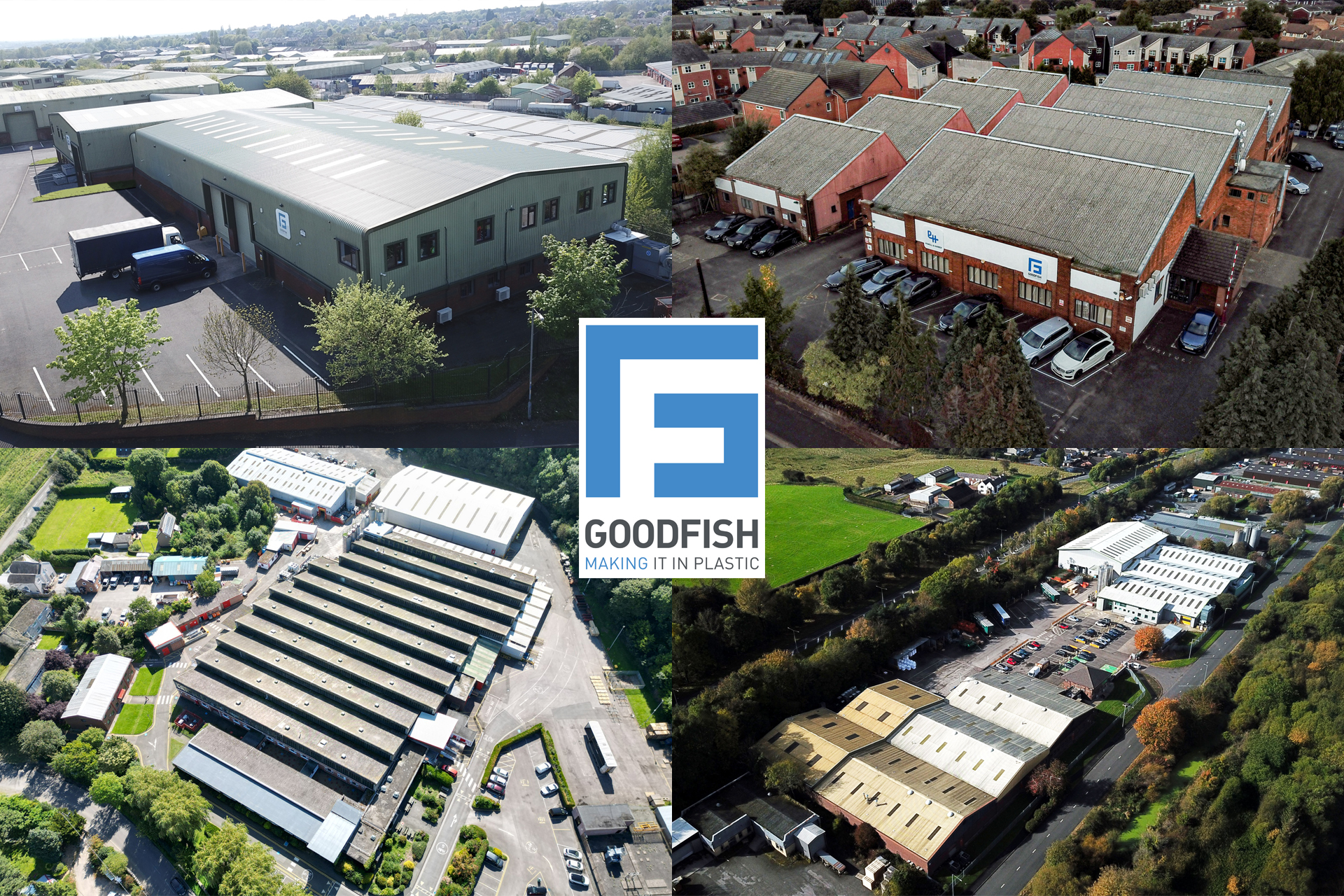
Goodfish is one of a small number of UK contract manufacturers that runs both processes under one roof. We have 32 extrusion lines and 49 injection moulding presses across four UK manufacturing sites, and we work with businesses ranging from multinationals to Tier 1 suppliers who need high volume, repeatable production at scale.
What that means in practice is straightforward. You describe your component, we tell you which process suits it and why. No bias toward one process over the other, no reason to steer you somewhere that doesn’t fit. If your requirements span both processes across a product range, we can handle that too, one supplier, one conversation, one point of contact.
If you’d like to talk through your component or get a feel for which process is the right fit, get in touch with the Goodfish team. We’re happy to have that conversation before you commit to anything.