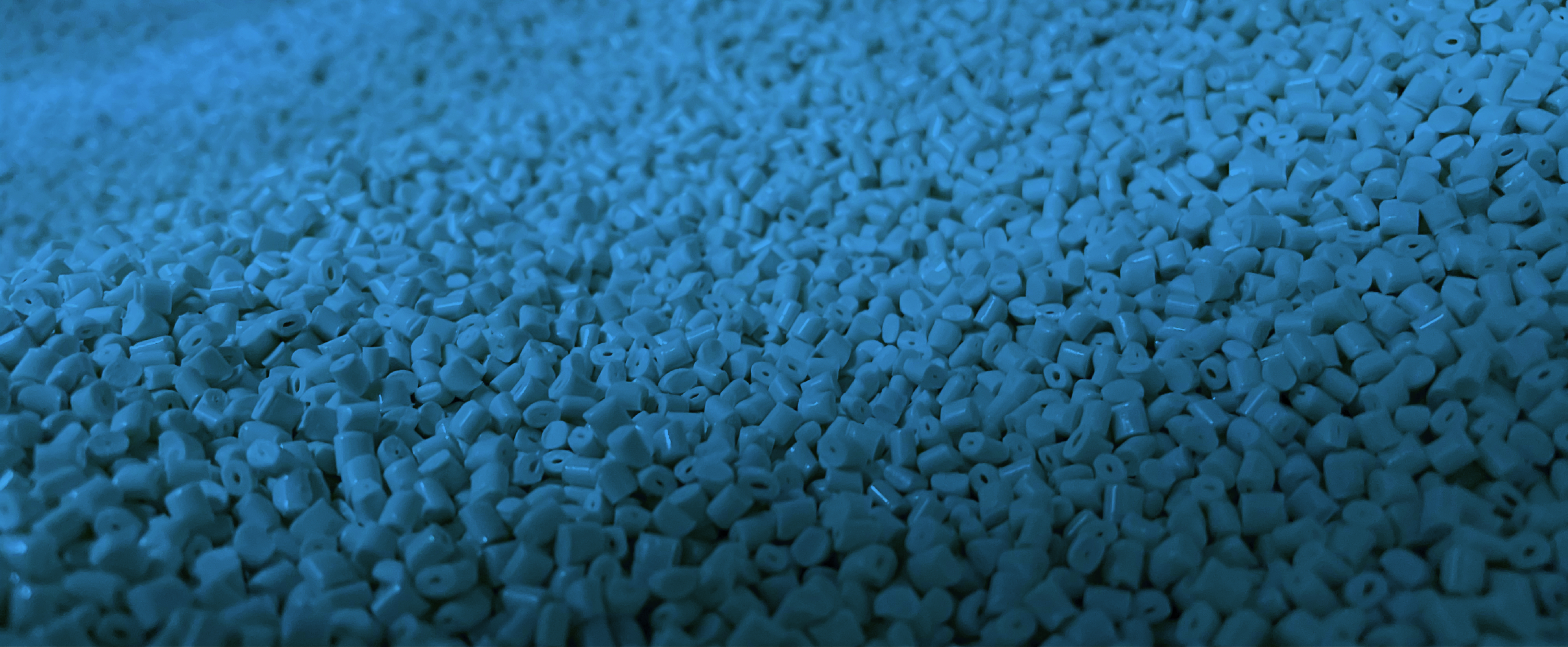

Injection moulding is a typical method of thermoplastic production. While there are several common plastics that can be used for injection moulding, material selection is tricky. Thermoplastic is a term used to describe a substance that is usually made of plastic polymers. This means that it can be remelted, reshaped, and refrozen after it has melted.
There are a variety of plastic injection moulding materials to be used, all serving different purposes.
ACRYLONITRILE BUTADIENE STYRENE (ABS)
ABS is a tough material that is yellowish in colour with some translucency but is close to opaque in nature, though there are some transparent grades available. A wide range of properties, from medium impact to high and very high impact, as well as high heat, plating, and flame retardant grades, are available. Find out more…
POLYCARBONATE (PC) & ACRYLONITRILE BUTADIENCE STYRENE (ABS)
PC-ABS plastic is one of the most frequently used engineering thermoplastics in the world because of its mechanical qualities. Even at low temperatures, this material has high strength, stiffness, heat resistance, and impact resistance. PC-ABS is simple to work with and maintains its dimensional stability over time. It also has improved flow characteristics and processability. Find out more…
ACETOL (POM)
Acetal plastic is a multipurpose, semi-crystalline engineered thermoplastic that is also known as polyacetal and polyoxymethylene (POM). Acetal is frequently utilised for components that require extreme stiffness, minimal surface friction, and excellent dimensional stability. The ability of a plastic part to keep its original dimensions when exposed to temperature and humidity changes is known as dimensional stability. Find out more…
POLYMETHYL METHACRYLATE (ACRYLIC)
The scientific name for the polymer known as acrylic, acrylic glass, and plexiglass is poly (methyl methacrylate). It is transparent, fragile, and light when unaltered. It transmits light and can be transformed into a variety of shapes, textures, and colour casts. PMMA is excellent for use outside. It won’t corrode and is resistant to weather, UV rays, and the majority of other environmental factors. PMMA is one of the safer plastics because it is BPA-free and recyclable. PMMA is significantly more sustainable as a result. Find out more…
HIGH DENSITY POLYETHYLENE (HPDE)
Petroleum is used to create the thermoplastic polymer known as High Density Poly Ethylene (HDPE). One of the most adaptable plastic materials on the market, HDPE plastic is utilised in a variety of products, including milk bottles, shampoo bottles, cutting boards, piping, and plastic bottles. HDPE plastic is well-known for its exceptional tensile strength and high strength-to-density ratio. It also has a high melting point and impact resistance. Find out more…
LOW DENSITY POLYETHYLENE (LDPE)
Low density polyethylene, or LDPE, is a flexible, pliable, and lightweight plastic. LDPE is renowned for its flexibility, toughness, and corrosion resistance at low temperatures. It is not appropriate for applications requiring structural strength, high temperature resistance, or stiffness. It is frequently employed in prosthetics and orthotics. LDPE is simple to fabricate and form, and it resists chemicals and impacts well. Find out more…
NYLON 6
Nylon 6 is a tough, abrasion-resistant polymer. Compared to nylon 6/6, it has a better surface appearance and processability. Because it is slightly less crystalline, it can be moulded at temperatures as low as 80 degrees F (45 degrees C) with less mould shrinkage. Find out more…
NYLON 66
High mechanical strength and superior resistance to wear and organic chemicals are two characteristics of NYLON 6/6 materials. The strength and stiffness of NYLON 6/6 GF30 are more than twice as great as those of unreinforced nylons, and its heat deflection temperature is almost as high as its melting point. High tensile and flexural strength, stiffness, an excellent heat deflection temperature, and superior abrasion and wear resistance are just a few of the material’s key characteristics. NYLON 6/6 is a 30% glass-fiber-reinforced nylon 6/6. Find out more…
POLYBUTYLENE TEREPHTHALATE (PBT)
PBT is a strong and stiff engineering plastic with excellent machining characteristics, chemical resistance, and bearing and wear properties. Find out more…
POLYETHERETHERKETONE (PEEK)
PEEK (polyetheretherketone) is a high-performance engineering plastic with outstanding resistance to harsh chemicals, and excellent mechanical strength and dimensional stability. It offers hydrolysis resistance to steam, water, and sea water. PEEK has the ability to maintain stiffness at high temperatures and is suitable for continuous use at temperatures up to 338oF (170oC). Find out more…
POLYETHERIMIDE (PEI)
PEI is a high performance engineering thermoplastic. PEI’s characteristics include high strength and rigidity at elevated temperatures, long term heat resistance, dimensional stability and good electrical properties. Find out more…
POLYCARBONATE (PC)
Polycarbonate is a high-performance tough, amorphous and transparent thermoplastic polymer with organic functional groups linked together by carbonate groups and offers a unique combination of properties. Find out more…
POLYMETHYLPENTENE (PMP)
PMP is a thermoplastic polymer that presents a transparency equivalent to glass or acrylic. It is classified as a polyolefin and has similar properties to Polypropylene (PP), except it is slightly more susceptible to attack by oxidising agents. Find out more…
POLYPROPYLENE COPOLYMER (PPCP)
Polypropylene Copolymer (PPCP) is an odourless, inert solid that is non-flammable and non-reactive. Even at low temperatures, PPCP is resilient and strong. Find out more…
POLYPHENYLENE SULFIDE (PPS)
PPS plastic is a semi crystalline, high temperature thermoplastic polymer. Due to its structure, PPS is a very chemically resistant polymer with very good mechanical strength, even at temperatures above 200°C. In addition to its low water absorption, PPS polymer also has good dimensional stability and excellent electrical properties. Find out more…
GENERAL PURPOSE POLYSTYRENE (GPPS)
GPPS is widely used due to its good physical and mechanical properties, environmental safety, chemical inertness to many substances, moisture, electricity and frost-resistance. Find out more…
THERMOPLASTIC ELASTOMERS (TPE)
TPEs are a family of rubber-like materials that combine rubber’s properties with plastics’ processing and recycling benefits. Find out more…
THERMOPLASTIC VULCANISATES (TPV)
Automotive seals, pipe seals, and other uses requiring heat resistance of up to 120 degrees Celsius have seen significant growth in the use of TPVs. The range of shore hardness values is typically 45A to 45D. Additionally, TPVs are well suited for under-bonnet automotive applications where better temperature and oil resistance are needed. Find out more…
HIGH IMPACT POLYSTYRENE (HIPS)
HIPS is one of the most widely used plastics and popular within the Point of Sale (POS), display and signage market due to its visual appearance (colour options, gloss level, texture), the ease with which it can be processed along with its antistatic and electrical conductivity. Find out more…
POLYVINYL CHLORIDE (PVC)
One of the most popular polymers used worldwide is polyvinyl chloride (PVC). Due to its adaptability, PVC is widely used in a variety of industrial, technical, and everyday applications, such as the construction, transportation, packaging, electrical/electronic, and healthcare industries.
PVC is a strong, long-lasting material that can be used in a variety of applications. It comes in a wide range of colours, from white to black and everything in between. Find out more…