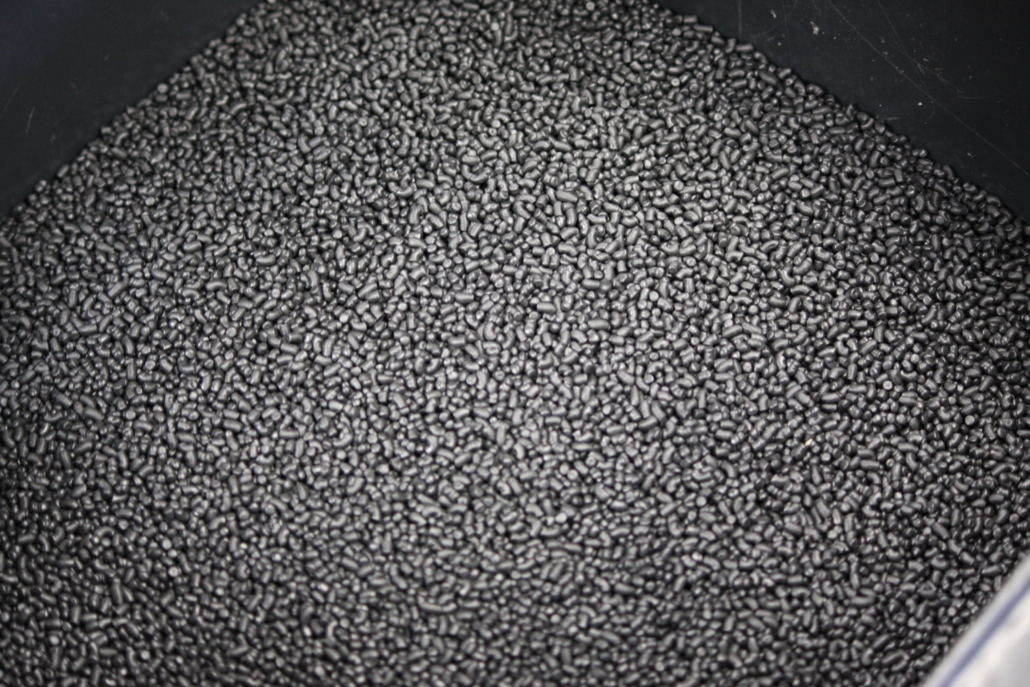
Injection Moulding Materials: How to Choose the Right Plastic for Your Part
Choosing the right material is one of the most important decisions in any injection moulding project. It influences how a part performs, how the tool is built, how stable production becomes and how much the component costs to manufacture over its lifetime. When parts are produced in high volumes and form a critical part of a wider product, material choice has a direct impact on project risk.
Much of the information available online reduces material selection to short descriptions of common polymers. That may help at an early concept stage, but it does not answer the questions engineers and buyers face when moving towards production. Will the material fill the part reliably. Can it hold tolerance at volume. Will it meet sector requirements. Can it be processed consistently without driving up cycle time or scrap.
In many projects, the material decision is made early, often before a manufacturer has reviewed the design. That choice may be based on familiarity or cost, but the consequences tend to appear later, once tooling is complete and sampling begins. At that point, issues such as poor fill, cosmetic defects or unstable processing are harder to resolve without delay or added cost.
This guide focuses on the practical factors that matter when selecting injection moulding materials for production. It is written for designers, engineers and purchasing teams who want clear, experience-led guidance that supports confident decision-making.
Why material selection decides whether a project succeeds
Material selection affects far more than the look or feel of a finished part. It dictates how the polymer flows through the cavity, how it cools, how much movement occurs as it settles and how sensitive the process is to change. When a material is poorly matched to the geometry or production targets, problems often surface during tooling trials, when options to correct them are limited.
Different polymers behave very differently under pressure and heat. Some support thin sections and longer flow paths with ease. Others require tighter temperature control and place constraints on gate design and wall thickness. Shrinkage behaviour also varies widely, which directly affects dimensional control and repeatability.
At production volumes, these differences become commercially significant. A material with a narrow processing window can slow output and increase scrap. Reinforced polymers can accelerate tool wear and increase maintenance demands. Materials that struggle to fill consistently can force compromises that affect appearance and yield. These factors influence unit cost, uptime and long-term stability.
Many issues seen during early production are not tooling faults. They stem from a material choice that does not suit the part or the way it needs to be manufactured. Getting this decision right early gives a project far more chance of progressing smoothly into volume production.
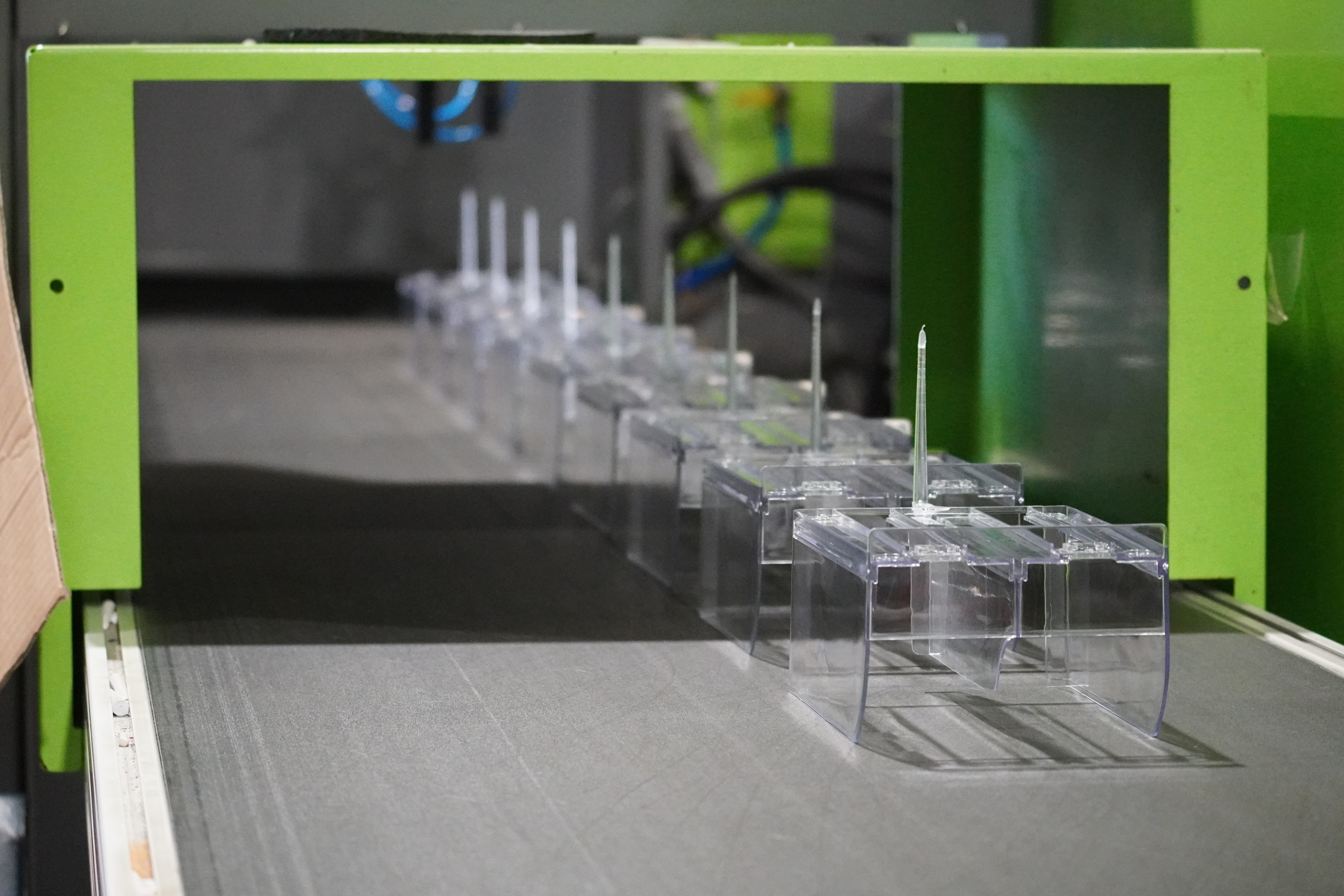
The materials buyers ask for most and what really matters
Most projects begin with a preferred material already in mind. Sometimes it is a polymer used on a previous part. Sometimes it is chosen because it appears suitable on paper. The critical question is not whether a material can be moulded, but whether it can be moulded reliably at scale within the constraints of the design.
ABS and PC ABS are commonly specified for housings and enclosures because they offer predictable behaviour and good cosmetic results. They suit many applications, but designs with thin features or longer flow paths can expose their limits if this is not considered during tooling design.
Polypropylene is often selected for high-volume parts where flow and cycle time matter. It supports efficient production, but its flexibility and lower stiffness mean it is not suitable for every application. Geometry and performance expectations need to be aligned early.
Nylons, including reinforced grades, are chosen where strength and durability are required. Their shrinkage behaviour, moisture sensitivity and impact on tooling wear need to be accounted for from the outset to avoid instability during production.
Flexible materials such as TPEs, along with polycarbonate for strength and clarity, can perform well when their processing requirements are understood. Across all of these materials, success depends on how the polymer interacts with the part design, the tool and the production environment. Preference alone is rarely a reliable guide.
This is where early manufacturing input makes a difference, turning a material choice into a decision grounded in production reality rather than assumption.
Choosing a material that works in production, not just on paper
Effective material selection starts with understanding how the part will be used and what it needs to withstand. Performance requirements, environmental exposure and sector constraints define the boundaries within which a polymer must operate.
From there, geometry becomes critical. Wall thickness, flow length and gate position determine whether a material will fill consistently or struggle during moulding. Cosmetic expectations also need to be realistic, as some polymers support uniform finishes more easily than others.
Cost considerations extend beyond material price. Cycle time, scrap rates, energy use and tooling wear all contribute to the true cost of a component. Availability and supply stability also matter, particularly where lead times could affect ramp-up.
Simulation and early analysis help identify risk before tooling begins. When combined with manufacturing input, material selection becomes a controlled decision based on how the part will actually be produced.

The material decisions that quietly undermine projects
Material issues rarely show up at the start of a project. They tend to emerge once the tool is built and the first parts are moulded. At that stage, the scope for change is limited.
A common scenario is a material that cannot reliably fill the geometry. Freeze-off, inconsistent fill or visible flow defects appear during sampling, forcing teams to consider tool changes or material substitution. Both introduce delay and cost.
In other cases, the material produces acceptable parts but only with long cycle times or tight processing limits. At volume, this reduces throughput and increases scrap. Reinforced polymers can add further risk if tooling wear has not been planned for.
Supply constraints can compound these problems. A technically suitable material may carry lead times or minimum order quantities that do not align with production schedules.
In most cases, the root cause is the same. The material decision was made without full manufacturing input at the point where it mattered most.
Sector requirements change the material conversation
Sector requirements place further constraints on material choice. In automotive applications, materials must meet strict approval standards and perform consistently across different environments. A polymer that appears suitable early on can fail odour, emissions or durability testing once assessed properly.
Medical applications operate within even tighter boundaries. Approved materials are often fixed, which places greater emphasis on understanding how that polymer behaves during moulding and how stable the process will be over time.
Electrical and construction products bring different demands around heat resistance, long-term stability and durability. In every case, materials need to be assessed against real operating conditions rather than laboratory data alone.
How Goodfish supports material selection
At Goodfish, material selection is treated as part of the wider development process. When a new part is reviewed, the focus is on how the chosen polymer will behave in production and how it will interact with the tool design.
We use simulation based on specific material grades to understand flow, cooling and risk areas before tooling begins. This is combined with experience from high-volume production, where small material differences can have a measurable impact on output and quality.
As tooling develops, material behaviour remains part of the conversation. Cooling, venting and process control are considered together so the tool supports stable production from the outset. Where material choice is fixed by sector requirements, the emphasis is on consistency. Where options remain open, availability and supply stability are reviewed to support reliable ramp-up.
During sampling, early trials confirm whether the material performs as expected. Where external testing is required, this is coordinated as part of the approval process. The aim is to reduce uncertainty and avoid late changes.

Common material questions we hear during project reviews
What is the best material for injection moulding?
There is no single best material. The right choice depends on how the part will be used, its geometry and the production volume. How a polymer behaves in a specific tool matters more than datasheet values.
How does material choice affect tooling cost?
Some materials require tighter temperature control, more complex venting or harder tool steels. Others increase wear over time. These factors influence the total cost of ownership, not just the initial tool price.
Can recycled materials be used in injection moulding?
In some applications, recycled or regrind content can be suitable. Its use depends on sector requirements and performance expectations. Consistency and process stability are key considerations.
When should a manufacturer be involved in material selection?
As early as possible. Involving a manufacturer before tooling decisions are finalised helps align material behaviour with design and production targets.
Is it possible to change material after a tool is built?
It can be done, but it often requires changes to tooling or processing and may trigger additional approvals. Early validation reduces the need for late changes.
Making the right material decision with confidence
Material selection shapes every stage of an injection moulding project. When the right choice is made early, tooling, sampling and production tend to progress with fewer interruptions. When it is not, issues often appear later, when they are harder to resolve.
This is why material decisions benefit from manufacturing insight rather than assumptions based on familiarity or documentation alone. Understanding how a polymer behaves in a specific tool and at production scale provides clarity before commitments are made.
At Goodfish, material selection is embedded within the NPI process. By combining practical experience with simulation, tooling insight and validation, we help customers move into production with confidence.
If you are reviewing material options for a new component or questioning whether an existing choice is right for volume manufacture, our team can help you assess the risks early. To discuss your project, get in touch with Goodfish.