Types of 3D Printing Technologies
The term “3D printing” has gained popularity recently, but the method has been present since the 1980s and is often referred to as “additive manufacturing.” Rapid prototyping was the process’s original name, and it was designed to make prototypes rapidly and with little tooling and work. The technology has advanced past prototyping in recent years and has proven sufficiently durable to permit its usage for manufacturing at production volume levels.
A computer-aided design (CAD) file is required, just like with any additive manufacturing method. The machine used for additive manufacturing loads the file and builds the model layer by layer, assuming sufficient compatibility. To manufacture a 3D-printed object, there are an increasing number of methods and technologies accessible. We will give an overview of the most popular varieties of 3D printing technology in this post, arranged around the fundamental procedure that governs how they function.
The phrases additive manufacturing and 3D printing will be used interchangeably.
Material Extrusion Process
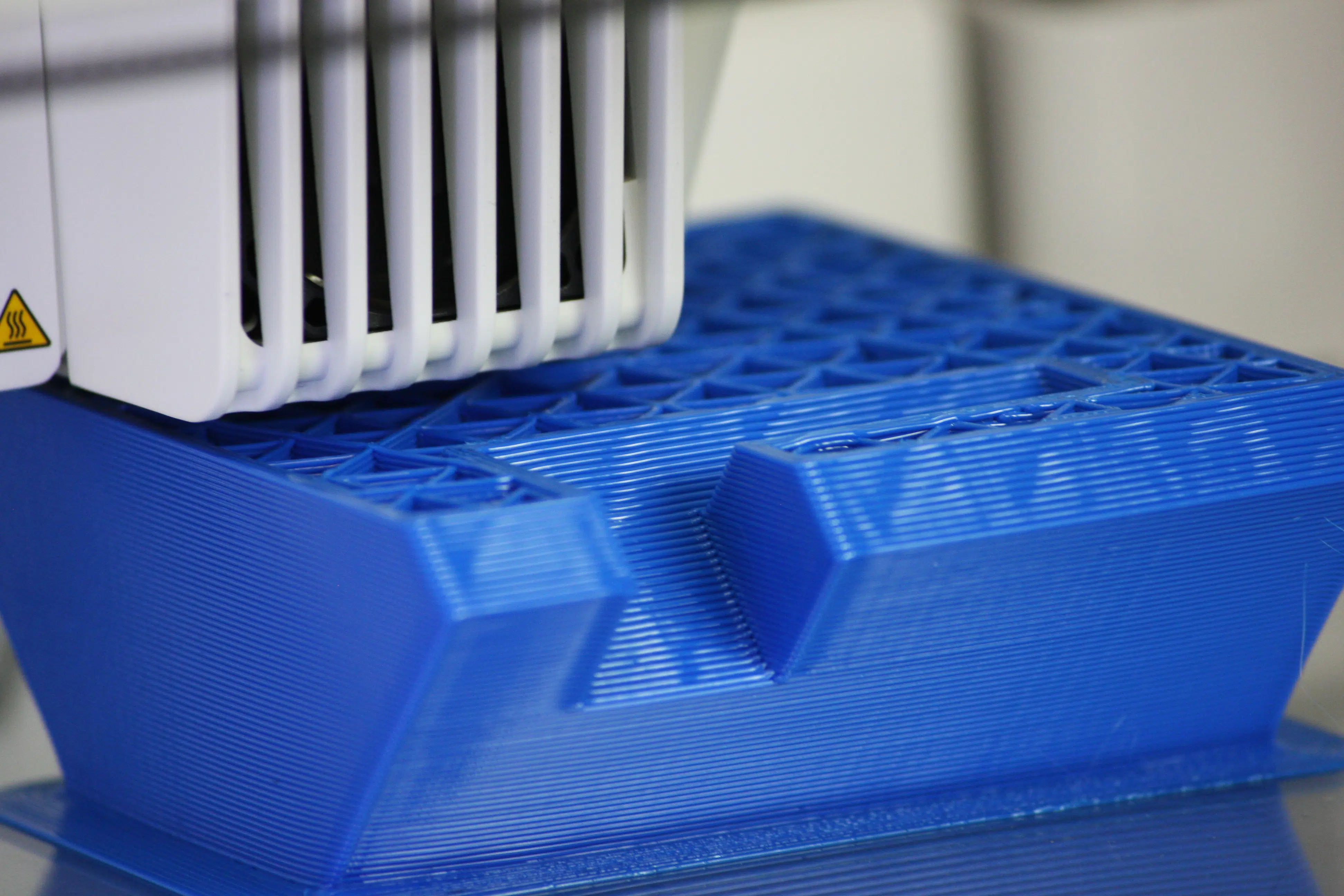
In a technique known as material extrusion, a thermoplastic material is fed into a heated nozzle, melting it so that it may be deposited onto the build platform, a flat surface used to hold the 3D-printed item. The part design is built up layer by layer, depositing each layer in turn. Fused Deposition Modeling (FDM) and Fused Filament Fabrication (FFF) are the two most popular material extrusion-based 3D printing techniques.
Fused Filament Fabrication (FFF) and Fused Deposition Modelling (FDM)
Fused Deposition Modelling 3D Printing (FDM), a material extrusion technology in which molten thermoplastics are deposited layer by layer to construct the desired form, is the most popular additive manufacturing process. The engineering plastics Acrylonitrile Butadiene Styrene (ABS), Polycarbonate (PC), Polyetherimide (PEI), and Polylactic Acid (PLA) are examples of typical materials.
The most popular technique in home desktop printer models is FDM, but these models often require more user care and upkeep than industrial counterparts. Fused Filament Fabrication (FFF), a widespread home 3D printing process that is comparable to FDM. Similar to FDM, FFF deposits material that has been heated or liquefied from a nozzle that is free to move about a platform using continuous filaments of thermoplastics, such as PLA. Spools of various colours and materials of filaments are sold.
Both prototype and final-use parts are produced using industrial FDM. This approach results in noticeable layer lines on the raw pieces, which frequently need additional processing and polishing. The need for support structures in some designs to create overhangs is another disadvantage.
Binder Jetting Process
The 3D printing technique known as “binder jetting” uses material particles that are bonded or fused together using a liquid chemical adhesive. When a layer is done, a new layer is put on top of it, continuing this procedure until the required component is created. Powder Bed and Inkjet Head (PBIH) 3D Printing, Plaster-Based 3D Printing, and ColorJet Printing are three popular binder jetting methods (CJP).
3D Printing using Powder Bed and Inkjet Head (PBIH)
Inkjet Head and Powder Bed (PBIH) An inkjet print head is used in 3D printing to move across a powder material bed and deposit binding agent selectively where it is needed to create the desired layer of the part. After the layer is finished, another layer of powder is placed on top, and the procedure is repeated until the entire part has been printed. The build plate is lowered as more powder is added to make room for printing the subsequent layer. The final part is eventually entirely encircled with powder material, which is then eliminated during the de-powdering process. The removed unbound powder material can be recovered and repurposed for other printing processes.
The benefit of this method is that it may be applied to a variety of materials, including ceramic powders, metal laminates, acrylic, and sand composites, as long as the binder will properly combine them. It can also support the addition of colour additives and is faster than some of the other 3D printing methods. It does, however, have restrictions on the level of accuracy and surface smoothness that may be achieved.
Plaster Based 3D Printing
The main distinction between plaster-based 3D printing and the powder bed and inkjet head (PBIH) technique mentioned above is the substance that is employed. The binder material is contained in the print head, while the powdered plaster is stored in the printer’s bed. The part is constructed in layers, similar to Powder Bed and Inkjet Head (PBIH) 3D Printing, and then extra plaster powder is scraped off to show the finished product.
The plaster pieces generated by this 3D printing technique are brittle and hence unsuitable for applications needing great strength, despite the fact that it is a less expensive technology and can enable the use of colour additives.
ColorJet Printing (CJP)
Similar to the other binder jetting technologies listed above, ColorJet Printing (CJP) uses a biding agent to combine ingredients that are in powder form. With ColorJet printing, the printer colours the outside of each layer, making it possible to print items with colourful external surfaces.
Powder Bed Fusion Process
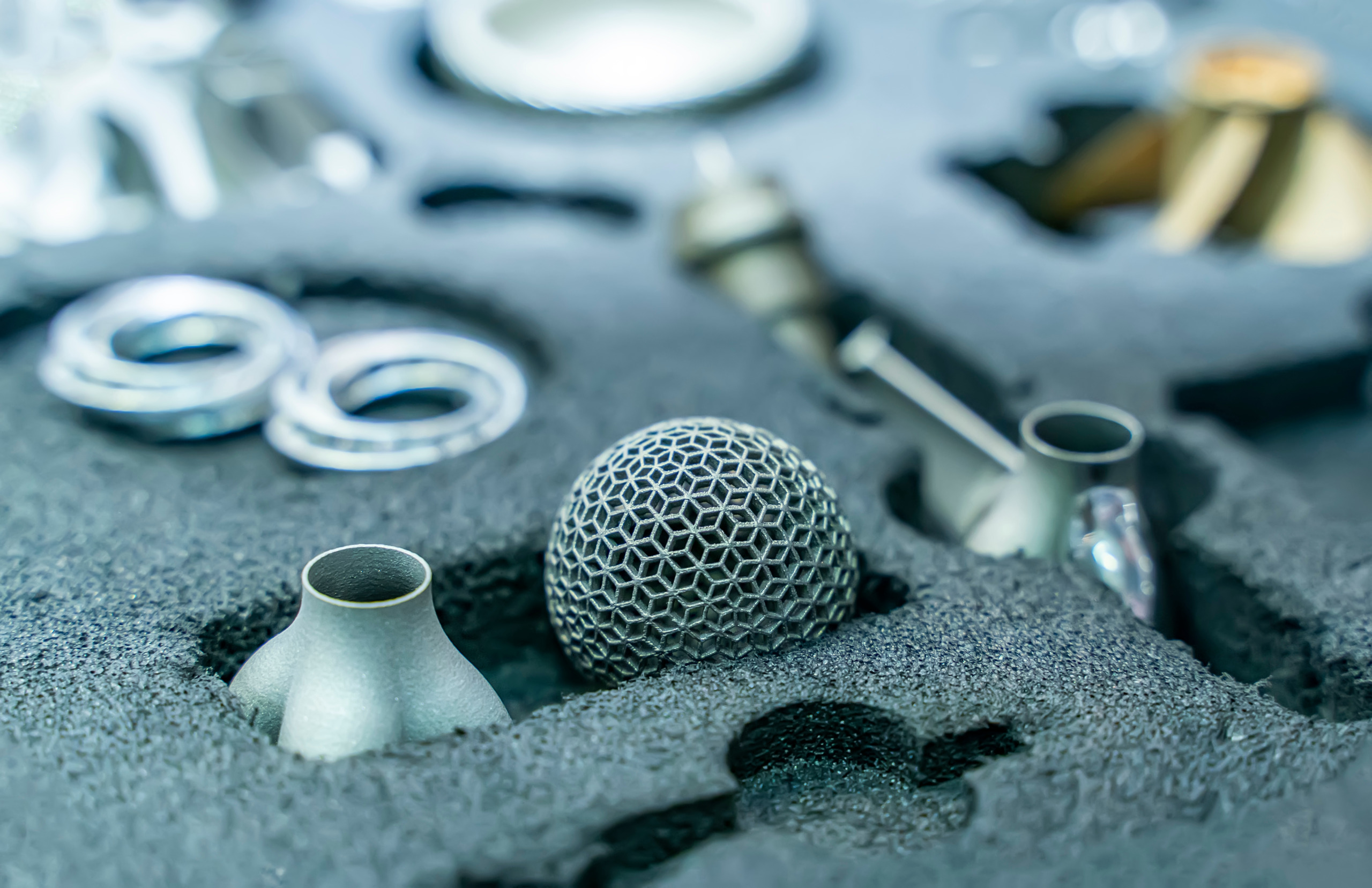
Similar to the binder jetting procedures, the powder bed fusion method uses heat to fuse together the material’s particles rather than a chemical adhesive. The following are five typical powder bed fusion-based technologies:
- Selective Laser Sintering (SLS)
- Direct Metal Laser Sintering (DMLS)
- Selective Laser Melting (SLM)
- Electron Beam Melting (EBM)
- Selective Heat Sintering (SHS)
Selective Laser Sintering (SLS)
Selective Laser Sintering (SLS), a type of Powder Bed Fusion technique, comes in second place to Stereolithography. By applying pressure or heat to a material, sintering creates a solid mass without melting or liquifying it. High-power lasers, most frequently pulsed carbon dioxide (CO2) lasers, are used to generate the heat. This method can be used to create parts that are useful.
Layer by layer, a laser sinters the required form in SLS out of a bed of powdered or granular thermoplastic polymers. Similar to stereolithography, a blade recoats the workpiece over the build platform for every layer. SLS, unlike FDM and SLA, does not require support structures since the un-sintered powder bed surrounds the workpiece and supports more intricate geometries. Thermoplastic elastomers for rubber-like components and nylon/polyamide, which can be “filled” with fibre, glass, or other additives, are materials used in selective laser sintering.
The majority of selective laser sintering applications are in industry. The surface’s graininess is a contributing factor in several of SLS’s disadvantages. Additionally, the sintering process tends to produce structures that are more porous, including up to 30% air. Depending on the application, the porous aspect of SLS printed items might be advantageous or disadvantageous. The porous material is less waterproof and more easily coloured.
Direct Metal Laser Sintering (DMLS)
The obvious difference between Direct Metal Laser Sintering and SLS is that this method is for metals. Sintering does not entirely melt the material, which is a crucial point to keep in mind because it is extremely similar to and sometimes mistaken with Selective Laser Melting (SLM), which was covered in our section on SLS. DMLS is a powder bed fusion method similar to its polymeric cousin in which a bed of metal particles is subjected to a laser to melt them just enough to allow them to fuse together. DMLS, in contrast to SLS, must be carried out in a sealed chamber that is filled with inert gas to prevent material oxidation, which would impair the bonding of layers. Metal powder particles are fused together using strong Ytterbium (Yb) fibre lasers.
DMLS makes it possible to print functioning hardware and components in three dimensions from a variety of alloys. Depending on the application, the most frequently utilised metals include copper and precious metals, nickel alloys, titanium alloys, aluminium alloys, and nickel alloys. The necessity for support structures, more labor-intensive finishing than with non-metal 3D printing, greater material costs, and restricted size and applications are a few drawbacks.
Selective Laser Melting (SLM)
Selective laser melting (SLM), also known as laser powder bed fusion (LPBF) or direct metal laser melting (DMLM), involves using a high-power laser to melt and fuse metal powders together. The printing method functions very similarly to the binder jetting technologies in that the part is built up in layers by carefully choosing which parts of each layer to selectively melt and resolidify in order to obtain the appropriate cross-section for that layer. The powder is melted by the laser energy rather than being chemically bound, which allows the powder to fuse into the required shape. As the build plate is lowered to make room for the upcoming layer to form, more powder is added. The process repeats until the entire part has been printed.
Aluminum, titanium, copper, chromium, cobalt, stainless steel, tool steel, and superalloys are just a few of the metal powders that SLM can work with. Due to the weight of metals, some designs may need for the inclusion of support structures to hold up previously printed layers, such as those with overhangs. After printing, these support structures will need to be taken down.
Electron Beam Melting (EBM)
Another powder bed fusion technique that functions similarly to selective laser melting is called electron beam melting, or EBM. The main distinction is that a strong stream of extremely high-energy electrons is employed as the heat source instead of a laser to melt the metallic powder in each layer. The printing procedure is carried out in a vacuum chamber, which contributes to the creation of a sterile, controlled build environment. When creating a part out of metal, it is employed as the primary material.
The finished components are typically devoid of residual stresses that can happen with other 3D printing processes that are carried out in layers since it is a hot process, meaning that a high temperature is maintained throughout the manufacturing of the metal part. Although the print process is reasonably quick, the items produced will need further finishing steps to achieve the appropriate surface smoothness and uniformity. EBM technology requires caution because it emits X-ray radiation from the machine itself, which uses an electron beam.
Selective Heat Sintering (SHS)
Selective Heat Sintering, often known as SHS, is another powder bed fusion process method that functions similarly to SLM by fused together powder material to build up a part in layers. The essential difference is that a sintering process employs heat and pressure to fuse together material particles, but it does so at a temperature below the material’s melting point (the temperature at which the material would change state from solid form into liquid form). The powdered material in the printer bed is spread out in a thin layer onto the build plate or platform, just like with the other powder bed fusion methods. The material is then fused together by the thermal print head by applying heat to the layer in order to fit the cross-sectional design from the CAD model. After that, the build plate is lowered, additional powder is added, and the process is repeated to create the part layer by layer. The procedure is essentially similar to selective laser sintering, with the exception that a thermal print head is used here instead of a laser as the heat energy source.
The procedure uses a thermoplastic powder as a material and runs at a lower temperature than SLS. Although it is a less expensive 3D printing technology, it is still very new when compared to some of the rival methods.
READY TO START?
To get your components or sub-assemblies manufactured by us, you can call our team on 01543 462 561 or send an email enquiry to [email protected]. Our team of experts will be in contact within hours to help you with your project.
We can advise on the design of your product to suit the manufacturing processes required. We can organise tooling for you and manage the project for you so that you receive conforming parts at a competitive price. And we’ll keep doing that for you for as many years as you need us to.