Evaluating Hydraulic, Electric, and Hybrid Plastic Injection Moulding Processes
Design engineers face a spectrum of options when selecting a plastic injection moulding process tailored to their specific applications. The three primary methods—hydraulic, electric and hybrid—each present distinct advantages and drawbacks. To facilitate an informed decision for your project, it is imperative to possess a comprehensive understanding of the disparities among these methods and the unique contributions they bring.
Hydraulic Plastic Injection Moulding
Originating in the late 1930s, hydraulic plastic injection moulding machines (IMMs) once held sway in the market. However, their dominance waned with the advent of all-electric machinery in the 1980s. Nonetheless, depending on specific needs, electricity costs and personal preferences, hydraulic machines may still prove optimal for certain tasks.
These machines employ hydraulic cylinders to forcefully unite two halves of a mould. High pressure is applied during this process. Subsequently, plastic substrate pellets undergo melting and the resulting liquid is injected into the mould cavity. After the plastic cools and solidifies, the mould halves part ways, allowing for the extraction of the finished part, and the cycle repeats.
To prevent the mould from unintentionally opening due to injection pressure, leading to an excess of material “flash” around the components, the clamping unit must supply an ample locking force to ensure the mould remains sealed during injection. For components with thin wall sections and deep draw depths, a requirement of around 3-4 tons of clamp force per square inch of the cavity exists. In contrast, for components with thick wall sections and shallow draw depths, approximately 2 tons per square inch is deemed sufficient.
Modern hydraulic IMMs boast the ability to control clamp forces surpassing 8,000 tons, producing parts weighing over 22kg. Notably, hydraulic moulding finds favour in the automotive industry, tasked with manufacturing large, weighty components like bumpers.
Advantages
Hydraulic injection moulding excels in actuating core pulls, ejectors and valve gates. It particularly suits thick-walled parts with extended hold times. The following are the merits you’ll experience in injection moulding projects at Goodfish:
• Ample clamp force for large parts
• Enhanced injection rates
• Heightened resistance to wear and tear
• Increased shot size
• Improved ejection capability
• Availability of gas accumulators to compensate for slower clamp movements
• Lower initial purchase price
• Cost-effective availability of replacement parts, leading to reduced maintenance expenses
• Manageability for high-level projects
• Abundance of units on the used market due to widespread adoption
Disadvantages
The potency of hydraulic machines comes at the expense of substantial energy consumption, even during idle periods. While a typical electric machine consumes around 2.55 kWh during an injection moulding process, hydraulic machines may consume 5.12 kWh. They demand higher moulding temperatures and prolonged cooling times, rendering them unsuitable for clean rooms due to fluid leakage risks.
Hydraulic IMMs also exhibit greater noise levels and diminished precision compared to all-electric presses. Nevertheless, as clamp forces escalate and control systems advance, hydraulic machines enhance their precision performance.
Electric Plastic Injection Moulding
Debuting in Japan in 1984, all-electric injection moulding machines made their mark as a relatively recent addition to the market. Despite their youth, they now constitute over half of all IMM machines sold in the United States, following rapid adoption. This trend is mirrored in the United Kingdom, where these advanced machines have gained substantial traction, reshaping the landscape of plastic injection moulding technology within the region.
These machines harness digitally controlled high-speed servo motors, diverging from hydraulics. This results in faster, repeatable, more precise and energy-efficient operations. Electric machines boast predictability, allowing for consistent replication of a desirable injection process, yielding higher quality parts. Once a job is programmed into an electric machine, its digital controls enable near-unattended operation, reducing labour costs and bolstering profits.
Advantages
Electric injection moulding, being devoid of oil contamination risks, suits cleanroom applications. Its high precision makes it ideal for small- to medium-sized parts and medical products like Petri dishes and syringes. Additional advantages include:
• Precision and repeatability, reducing scrap rates
• Fluid-free, cleaner process
• Reduced downtime associated with hydraulics
• Energy savings ranging from 30% to 70%
• Quieter operation with motor noise below 70 dB
• Higher rapid injection speeds up to 800 mm/sec and accelerated clamp motion
• Shorter start-up time and up to 20% faster cycle times
• Lower unit cost with minimal material waste
• No need for consumables such as oil, leading to reduced replacement or cleaning requirements
• Lower power requirements, resulting in significantly reduced operating costs
Disadvantages
Despite their speed, cleanliness and energy efficiency, electric machines fall short in achieving the clamp forces generated by hydraulic counterparts. Additionally, they entail a higher initial cost. Being toggle-clamp machines driven by ball-screws, both of which are wear items, replacement costs can be substantial and locating them on the used market challenging. Despite their precision, the high positioning accuracy of electric machines can make them less forgiving compared to hydraulic presses.
Hybrid Plastic Injection Moulding
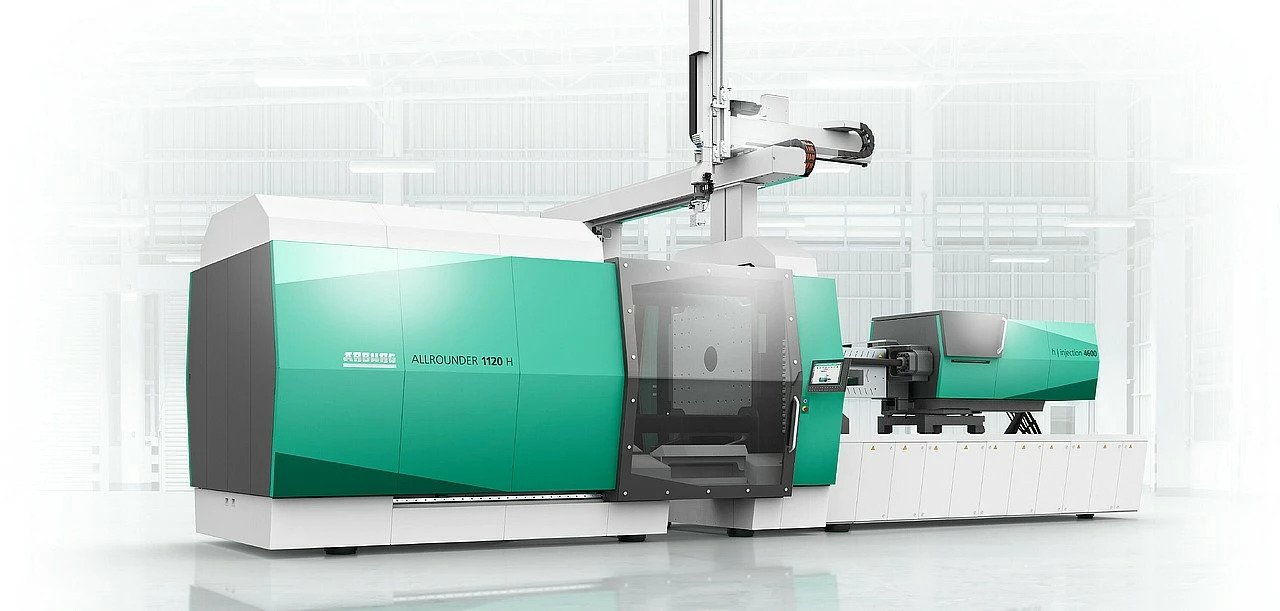
Marrying the strengths of hydraulic and electric machines, hybrid injection moulding machines have graced the market for several decades. They amalgamate the robust clamping force of hydraulic machines with the precision, repeatability, energy savings and reduced noise of electric machines. This fusion facilitates superior performance for both thin and thick-walled parts. The efficiency and user-friendliness of hybrid machines have propelled their popularity in recent years.
Approximately 66% of energy consumption in a hydraulic press is attributed to screw recovery. While hybrid presses entail higher upfront costs, their electrified screw rotation yields substantial savings, benefiting customers. Our hybrid machines deliver force akin to full-hydraulic machines while retaining the energy efficiency comparable to all-electric models.
Advantages
Hybrid plastic injection moulding stands out as an energy-efficient, enduring process with less demand, translating into a quicker return on investment. Specific advantages include:
• Continuous adjustments enabled by the servo pump
• Diverse product design possibilities
• Tendency to employ a two-clamp system over a toggle
• Median upfront cost compared to hydraulic, electric and hybrid options, promising long-term savings
• Closed-loop process with faster response times
• Lower temperature requirements, necessitating less cooling and prolonging oil and machine lifespan
• Expedited return on investment due to these operational efficiencies
Disadvantages
The unique nature of each hybrid machine poses challenges in matching the correct press to a product and securing replacement machines for specific applications. Maintenance for a hybrid machine requires a supervisor with knowledge of both hydraulic and electric presses.
READY TO START?
To get your components or sub-assemblies manufactured by us, you can call our team on 01543 462 561 or send an email enquiry to [email protected]. Our team of experts will be in contact within hours to help you with your project.
Whether you’re looking for a specialist plastic extrusion manufacturer or injection moulding manufacturer, we can advise on the design of your product to suit the manufacturing processes required. We can organise tooling for you and manage the project for you so that you receive conforming parts at a competitive price. And we’ll keep doing that for you for as many years as you need us to.